
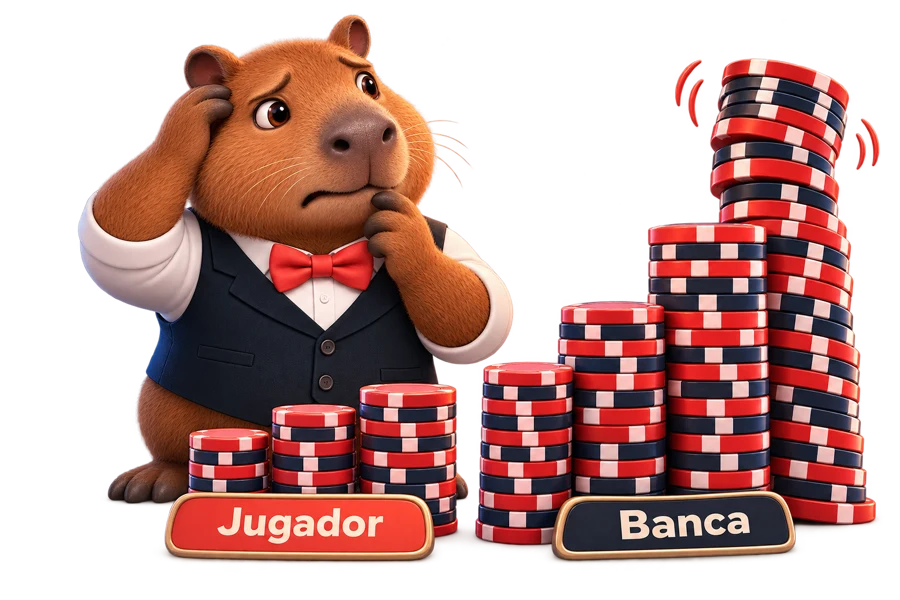
Doubling the bet after a loss wins nothing back. Six lost hands in a row already call for 64 times the initial bet. With a bet of 5,000 pesos that means 320,000 on a single hand. The table also has a cap, so the progression is cut off before it reaches the end.
I tried it at one point, like almost everyone. It worked three nights in a row and failed on the fourth.
«The system wins nothing: it only trades many small wins for one big, rare loss.» Camilo Andrés
The numbers behind the progression
The sequence grows faster than intuition suggests. Here it is, hand by hand:
- first hand, one bet;
- third hand, four bets;
- fifth hand, sixteen bets;
- seventh hand, sixty-four bets.
A run of six or seven lost hands shows up in a long session more often than it seems, and it takes no special bad luck.
The table cap cuts the system off
Every table has a maximum bet. That number is not there by accident.
When the progression hits the cap, you can no longer double. Then you are left with the whole accumulated loss and without the hand that was supposed to win it back.

Why a streak does not correct itself
Each hand is dealt independently of the previous ones. The table keeps no account of what it owes you.
So after six losses the probability of the seventh is the same as that of the first. The feeling that «it is due» is just that, a feeling.
What I do instead of doubling the bet
I fix my bet at the start and do not move it during the session. That way the balance goes down slowly and the session lasts as long as I planned.
I divide my balance by the minimum limit and aim for at least fifty hands. If the number does not work out, I change tables before sitting down, not after losing.